If you plan to upgrade electrical panel capacity in your home, it helps to know each step before the work actually begins. This guide walks you through the job, from the first check to the final inspection. It’s for homeowners in Douglas, Cobb, and Paulding counties who are adding appliances, finishing a remodel, or currently living with an older panel. You’ll see what an electrician looks at, what your options are, and what to ask before you book your appointment.

Signs It’s Time to Upgrade Electrical Panel Capacity
Your electrical panel sends power from the utility lines to every circuit in your home. ENERGY STAR says older homes without central air conditioning might have only a 100-amp panel, while most newer homes have a 200-amp breaker box.
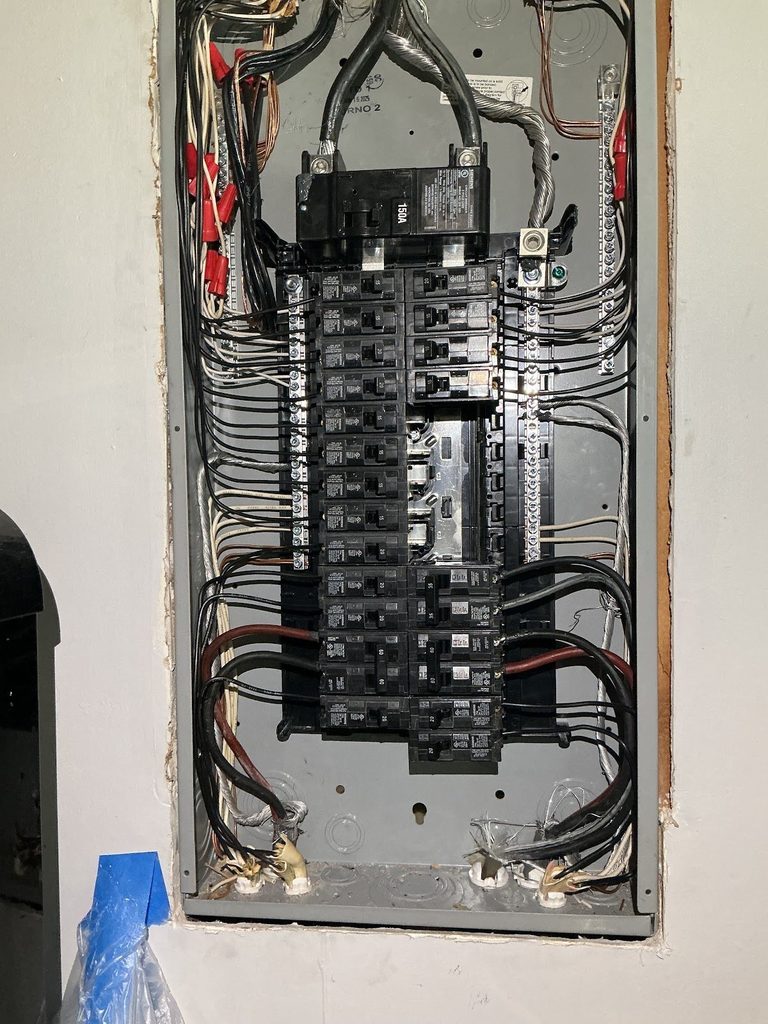
You can read the amp rating on the main breaker, which sits at the top or bottom of the panel. Then look for empty slots. According to ENERGY STAR, a panel with very few or no open slots for new breakers might need an upgrade.
Other reasons you may want to have your panel checked:
- You’re adding an EV charger, a heat pump, a hot tub, or a standby generator
- Your home still has a fuse box
- Your breakers trip often, or outlets and switches feel warm
- A remodel adds new circuits
Frequent circuit breaker trips or warm outlets indicate that there is a problem, but the fix may be a simple repair rather than a full upgrade. An electrician should find the cause first.
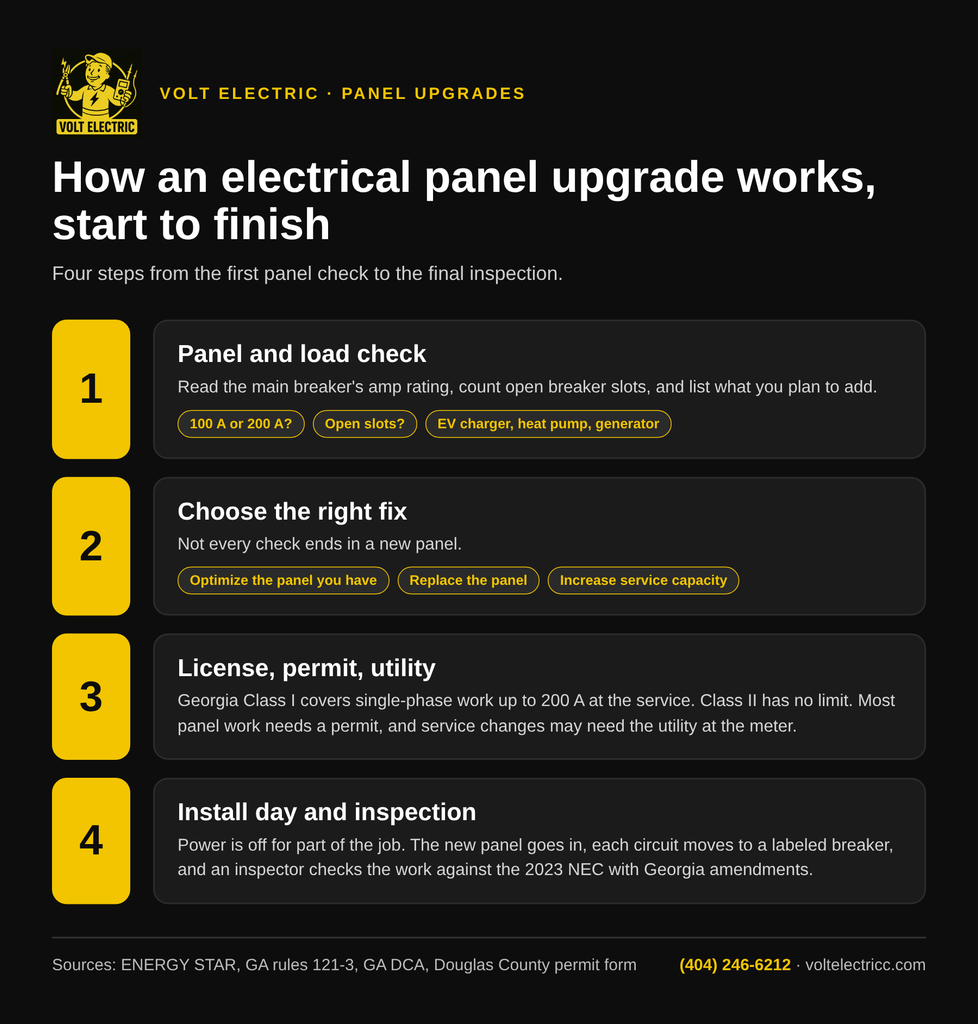
Step 1: The Panel and Load Check
The job starts with a visit. Your electrician will open the panel, check the main breaker rating, and look at the condition of the breakers and wiring. They should also ask what you plan to add. A new heat pump or an EV charger draws far more power than a new light does, so your plans can determine what you need.
From there, the electrician will add up the power your home uses now, as well as what it will need later. This load check tells you whether your current service can handle the new equipment or not.
Step 2: Choose the Right Fix
A panel check can end with a smaller fix rather than installing a whole new panel. An electrician may be able to optimize your existing panel instead, according to ENERGY STAR. That can mean moving an underused circuit onto another one, or swapping some double-pole breakers for single-pole ones to free up space.
| Option | When it fits | What changes |
|---|---|---|
| Optimize the panel you have | Enough amps, but no open slots | Circuits get combined or breakers swapped |
| Replace the panel | Old, damaged, or full panel, or a fuse box | New panel and breakers at the same amp rating |
| Increase service capacity | Your loads need more amps, such as 100 A to 200 A | New panel plus work at the meter and service |
Ask your electrician to explain why they picked one option over the others. Get the answer in a written scope.
Step 3: License, Permit, and Utility Steps
Georgia’s Secretary of State says an electrical contractor may not legally perform services until they hold an active license. The state has two classes. Class I is limited to single-phase work up to 200 amps at the service. Class II has no limit. If your upgrade goes above 200 amps, you will need a Class II contractor.
Most panel work also needs a permit. Douglas County’s residential electrical application asks for the contractor’s state license number and license class. Georgia’s Department of Community Affairs lists the 2023 National Electrical Code (NEC), with Georgia amendments, as the state’s current electrical code. The inspector will check the work against the code to ensure standards have been met.
If the job changes your service, the utility may need to shut off power at the meter and reconnect it after. Ask who handles the paperwork and the utility steps before the work starts.
Step 4: Install Day and Final Inspection
On install day, the power to your home is going to be off for a portion of the work. Plan ahead for a fridge, a home office, or medical equipment to be powered down. The electrician will remove the old panel, mount the new one, and move each circuit to a new breaker. Ask for a clear label on each breaker, so you know which one controls each room.
After the work, an inspector will check the panel against the code. Once it passes, your home is ready for the loads you planned for.
Panel Upgrades in West Metro Atlanta
At Volt Electric, we help homeowners across west Metro Atlanta upgrade their panels. Our office is at 2751 Mt Vernon Rd in Lithia Springs, and we also serve Douglasville, Austell, Powder Springs, and Villa Rica. Our panel and surge protection services include panel upgrades, breaker panel replacement, fuse box replacement, service capacity upgrades from 100 A to 200 A and above, panel inspections, and load balancing. If you’re adding a standby generator, our generator and backup power services include panel upgrades to support the install. Our guide on how to choose an electrician near me covers licenses and written scopes in more detail.
Frequently Asked Questions
How do I know if I need my electrical panel upgraded?
Have your system checked if your home is older, you’re adding major appliances, or your breakers trip often. Frequent trips or warm outlets and switches can point to a problem, but the fix may be a repair rather than a full upgrade.
Is a 100-amp panel enough for my home?
It depends on what you run. Per ENERGY STAR, older homes without central air might have only a 100-amp panel, while most newer homes have 200 amps. A load check shows if your home needs more.
Can I upgrade my electrical panel myself?
No. In Georgia, an electrical contractor needs an active state license, and most panel work needs an inspection.
Do I need a new panel if I’m out of breaker slots?
Maybe not. An electrician may be able to combine underused circuits or swap some breakers to free up space.
Will my power be off during a panel upgrade?
Yes, for part of the job. Ask your electrician how long the power will be off so you can plan for your fridge and anything else you rely on.
Sources: ENERGY STAR: Make your home electric ready, Georgia Board of Electrical Contractors rules, Chapter 121-3, Georgia Secretary of State guide for electrical contractors, Georgia DCA current codes, Douglas County residential electrical permit application.
If you’re ready to upgrade electrical panel service in your home, call Volt Electric at (404) 246-6212 or get in touch online to schedule a panel check. A safe, right-sized panel helps protect your home as you add new appliances.